 MyTattooStencil
Cover-Up Tattoo Ideas
Botanical clusters, layered leaves and geometric patterns can provide starting points for a cover-up conversation.
Cover-up motif planning
- Botanical
- Overlapping leaves; Density over old ink
- Geometric
- Repeated shapes; Alignment and scale
- Illustrative
- Dark focal areas; Composition and coverage
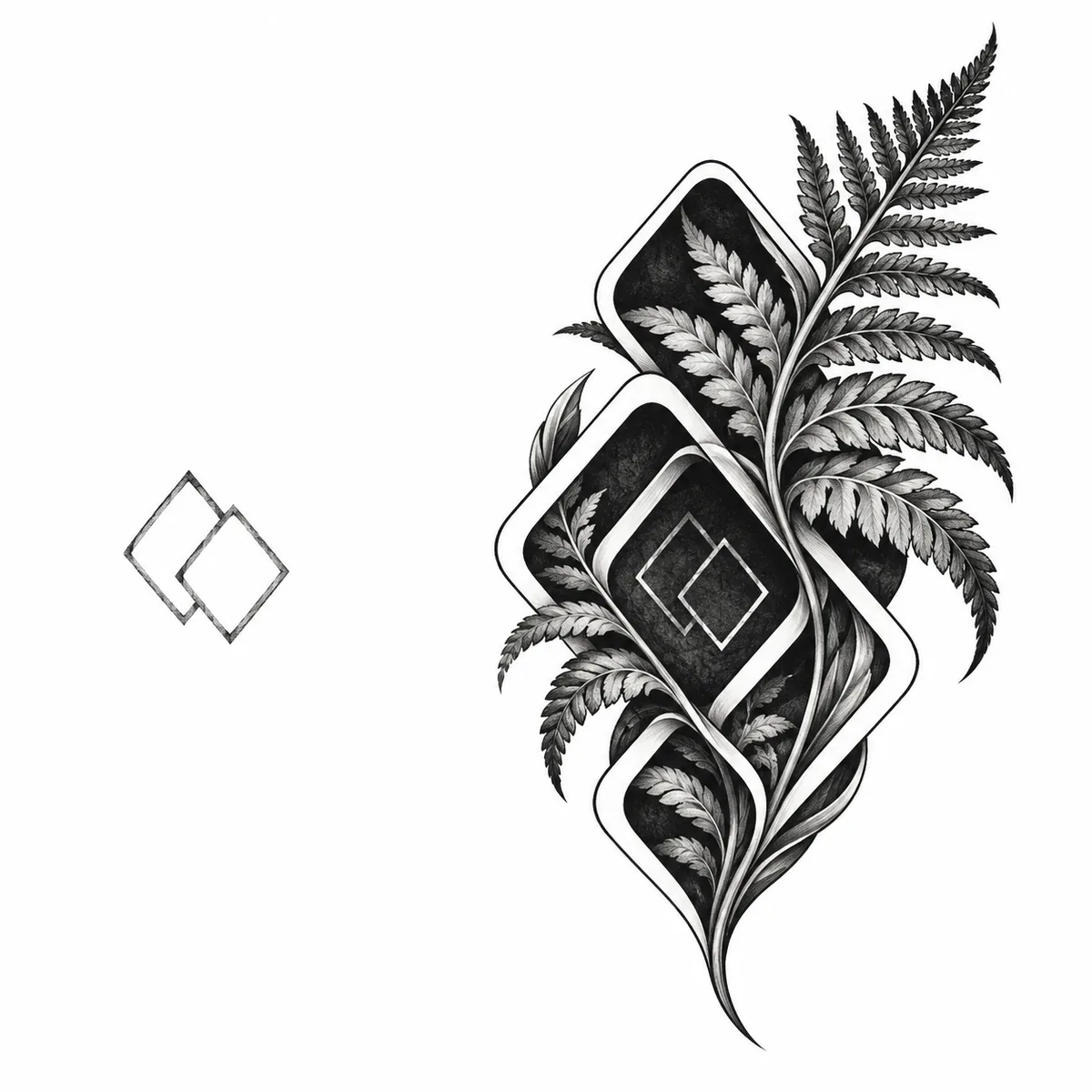
Which motifs give an artist room to work?
Leaves can overlap old strokes, abstract geometry can redirect their rhythm, and illustrative patterns can offer darker focal areas. None of these approaches works for every tattoo. Bring a clear photo to your consultation.
How should I compare ideas?
Compare size, direction and dark areas rather than expecting an exact copy. Keep notes about features you want to retain. Try the cover-up tool and bring multiple concepts to an artist experienced in cover-ups.
Questions, answered.
Which motifs are useful starting points for cover-ups?
Layered leaves, original geometric forms and illustrative dark areas can give an artist room to work with old strokes.
Should I choose the new motif before a consultation?
Bring preferences and several concepts, but allow the existing tattoo and your artist’s assessment to guide the design.
Why are cover-up ideas often larger?
Additional area can help redirect old lines into a new composition. The appropriate size depends on the existing ink.
Can a pale flower hide dense black ink?
A picture cannot establish that. Ask an experienced cover-up artist to assess density and available techniques.
Are the before-and-after examples real clients?
No. These are AI-generated illustrations with simple old-ink shapes on paper, made to explain concept development.
Keep exploring
AI-generated, for reference only. Consult a licensed tattoo artist before tattooing. We do not provide medical advice.